
Marketing Solutions Ahead of Customer Service Problems

Why Your Best Customer Service Strategy Starts Long Before a Customer Needs Help
Every company invests in customer service. The best companies invest in marketing that reduces the need for customer service in the first place.
That may sound backwards, but it's one of the most overlooked opportunities in marketing today.
Most businesses think of marketing and customer service as two separate departments with two separate goals. Marketing is responsible for generating leads and making sales. Customer service exists to solve problems after the sale.
In reality, they're two sides of the same customer experience.
Every question your support team answers, every compatibility issue they explain, and every product setup problem they solve is telling you exactly what content your customers need. Instead of answering the same questions one customer at a time, smart companies create marketing content that answers them for everyone.
The result is fewer support tickets, happier customers, lower service costs, and a stronger brand.

Every Customer Service Question Is a Content Opportunity
If your customer service representatives answer the same question ten times a day, that's not just a customer service problem—it's a marketing opportunity.
Customers shouldn't have to call your support line to learn something that could have been explained in a two-minute video or a simple blog article.
A growing library of educational content allows customers to solve problems on their own, on their own schedule. Whether it's a setup guide, troubleshooting article, product comparison, FAQ, or short YouTube video, each piece of content works like another member of your support team.
Unlike a phone call, that content never goes home for the day.
It continues helping customers twenty-four hours a day while reducing the workload on your service staff.
Your Customers Already Want Your Help
There's another advantage many companies overlook.
The audience you're creating this content for has already chosen your brand. They've already purchased your product. They're already rooting for your success.
That means they're far more likely to spend two minutes watching a helpful video than twenty minutes sitting on hold waiting to speak with customer service.
Helpful content respects your customer's time.
- Instead of creating frustration: It creates confidence.
- Instead of forcing customers through a call tree: It gives them immediate answers.
Friendly customer service will always matter. But the best customer service often happens before the customer ever reaches for the phone.
Solve Compatibility Problems Before They Exist
Compatibility questions are one of the biggest drivers of customer confusion across countless industries.
Many companies respond by publishing a compatibility chart somewhere on their website. That's a good start. But it's only the minimum. The better solution is to become proactive.
Work with compatible brands. Collaborate with retailers. Create videos demonstrating products working together. Publish buying guides that explain which combinations produce the best results.
Meet customers where they're already shopping instead of waiting for them to discover compatibility problems after they've made a purchase.
Imagine a customer buying two products from different manufacturers. Instead of hoping they figure everything out themselves, your content already explains which products work together, what accessories they'll need, and what to avoid.
You've eliminated confusion before it becomes a support ticket. That's valuable marketing.
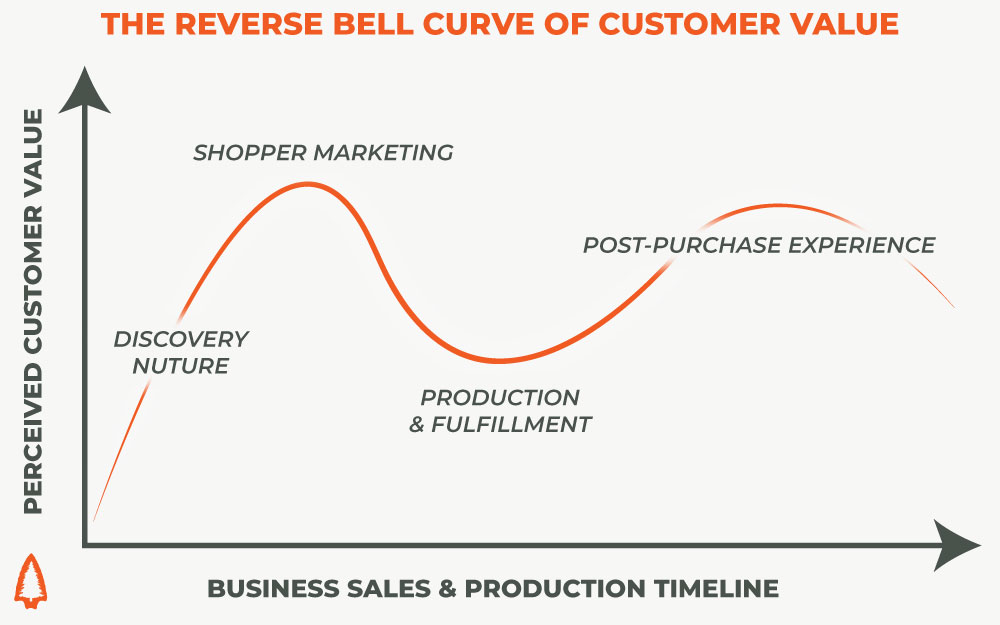
The Reverse Bell Curve of Customer Value
One of the biggest misconceptions in business is where customers actually perceive value. Most companies invest the majority of their resources into production: better manufacturing, better logistics, better inventory management, and better engineering.
All of those investments are important. But customers rarely see them.
Think about your business as a reverse bell curve:
On one end is marketing. This is where customers first experience your company. They visit your website, watch your videos, read your articles, compare products, and decide whether they trust your brand enough to buy.
In the middle is production. Ironically, this is often where companies spend the most money and effort, yet it's largely invisible to customers. They benefit from the finished product, but they never witness the countless hours spent designing, manufacturing, sourcing materials, or managing operations.
On the opposite end is customer service. This becomes the customer's lasting impression. When they need help, have questions, or encounter an issue, your service team defines how they remember your company.
The customer experiences the two ends of the curve far more than the middle. That's why marketing and customer service deserve to work together.
When your customer service team shares recurring questions with your marketing team, your content becomes smarter. Every FAQ becomes a blog article. Every troubleshooting call becomes a video. Every common mistake becomes an opportunity to educate future customers before the problem ever occurs.
Instead of repeatedly solving the same issue, you're preventing it altogether.
Build a Content Library That Keeps Working
Great marketing isn't just about attracting new customers. It's about serving existing ones.
Over time, every article, guide, video, comparison chart, and tutorial becomes part of a growing knowledge base that continues delivering value long after it's published.
- Customers find answers faster.
- Support teams spend less time repeating themselves.
- Sales teams spend less time overcoming objections.
- Search engines reward helpful content.
- Your website becomes more valuable every month.
Unlike paid advertising, educational content continues working long after the campaign ends. That's one of the highest-return marketing investments a business can make.
Marketing and Customer Service Shouldn't Compete
Too often, marketing measures clicks while customer service measures tickets. But both departments share the same mission: Help customers succeed.
When marketing creates accurate expectations and customer service reinforces them with helpful resources, customers notice.
The ownership experience becomes smoother. Trust grows. Loyalty increases. Customers become advocates instead of complainers. That's not just good customer service—that's good marketing.
Turn Customer Questions Into Your Competitive Advantage
Every business has recurring customer questions. The companies that grow fastest don't simply answer them. They document them. They organize them. They publish them. They transform them into valuable content that helps every future customer.
If your support team keeps hearing the same questions, your marketing team already has its next content calendar.
At Trailmark, we help brands uncover the questions customers are already asking and transform those answers into strategic marketing assets. From blog articles and buying guides to product videos, compatibility resources, and educational campaigns, we create content that builds trust, reduces customer service demands, and improves the ownership experience.
The best customer service doesn't begin when a customer has a problem. It begins long before they ever need to ask for help.